

CCRN-Adult Dumps PDF - CCRN-Adult Real Exam Questions Answers
Get Started: CCRN-Adult Exam [2026] Dumps AACN PDF Questions
NEW QUESTION # 512
Causes of Acute Renal Failure (ARF) may include all of the following EXCEPT:
- A. acetaminophen toxicity
- B. excessive use of diuretics
- C. antihypertensive medications
- D. septic shock
Answer: A
Explanation:
Acetaminophen toxicity would most likely cause liver damage (not kidney damage) as the bulk of acetaminophen metabolism takes place in the liver.
A few causes of Acute Renal Failure (ARF) include septic shock, antihypertensive medications and excessive use of diuretics.
NEW QUESTION # 513
A student nurse comes to the critical care nurse concerned that a patient's PICC line is infiltrating. Which of the following considerations MOST guides the critical care nurse's response?
- A. PICC lines only typically infiltrate within the 24 hours immediately after their insertion.
- B. If the patient's PICC line is infiltrating, surgery will likely be necessary.
- C. Intact PICC lines almost never infiltrate.
- D. The medications administered in PICC lines are likely to cause localized tissue death if infiltration occurs.
Answer: C
Explanation:
A Peripherally Inserted Central Catheter (PICC) is inserted into a vein peripherally then advanced into the superior vena cava. Infiltration occurs in IVs when the catheter slides out of the vein into the tissues around the insertion site. Because a PICC line is advanced far into a vein, the likelihood that an intact PICC line will infiltrate is very slim, as many centimeters of catheter would have to come out of the vein.
While some medications administer in PICC lines are likely to cause localized tissue death if infiltration occurs, infiltration in PICC lines is very unlikely; this is the reason that these medications are administered through PICCs.
NEW QUESTION # 514
The nurse is caring for a critically ill patient with a history of treatment for depression. The patient tells the nurse, "I want to die. My life is not worth living anymore." The nurse should implement all of the following into the patient's plan of care EXCEPT:
- A. request a psychiatric consult
- B. allow the patient to lead the conversation
- C. avoid asking the patient directly if they are presently feeling suicidal
- D. consult with the doctor about the patient's previous psychiatric medication and the need to maintain the regimen while the patient is hospitalized
Answer: C
Explanation:
The nurse should not avoid asking the patient directly about current suicidal thoughts. It is important to note that you do not promote suicidal thoughts by asking the question. Often, the communication of feeling suicidal is a cover for wanting to discuss fear, pain, or loneliness. Similarly, if depression is suspected, ask directly, and allow the patient to initiate conversation. A psychiatric referral is recommended, and it is also important that healthcare providers do not forget to maintain the patient's psychiatric medication regimen while hospitalized to avoid worsening of the patient's psychological status.
NEW QUESTION # 515
The critical care nurse is assisting a colleague in treating a patient who is developing an Addisonian crisis. Which of the following interventions by the critical care nurse's colleague requires correction when observed by the nurse?
- A. Preparing to administer insulin to treat hyperkalemia
- B. Calling respiratory therapy to insert an arterial line
- C. Preparing a pressure bag to administer normal saline as fast as possible
- D. Starting a second IV site
Answer: A
Explanation:
Hypoglycemia is a symptom of Addisonian crisis, and administering insulin alone can worsen this hypoglycemia. While hyperkalemia is a concern, this is not the ideal treatment method for this patient.
The patient should have a second IV site to allow multiple different IV medications to be given. Critical hypotension can occur with Addisonian crisis, and administering a bolus of normal saline and inserting an arterial line are both correct interventions.
NEW QUESTION # 516
Massive transfusion is defined as the administration of more than how many units of blood within 24 hours?
- A. Four
- B. Twenty
- C. Eight
- D. Ten
Answer: D
Explanation:
Massive transfusion is defined as the administration of more than ten units of blood (whole blood or packed red blood cells) within 24 hours, replacing the patient's total blood volume.
NEW QUESTION # 517
Which of the following nonpharmacological techniques do NOT help in reducing pain in the critically ill patient?
- A. Music therapy
- B. Hypnosis
- C. Cutaneous stimulation
- D. Non-steroidal anti-inflammatory agents (NSAIDs)
Answer: D
Explanation:
A variety of nonpharmacologic pain-reducing strategies are useful in patients with trauma, and the nurse may combine these with drug therapy for maximal effect. Cognitive interventions for pain include music and pet therapy, deep breathing and progressive relaxation, cutaneous stimulation (i.e., massage), family presence at the bedside, guided imagery, dim lighting, and hypnosis. These nonpharmacologic cognitive interventions can all be valuable adjuncts to pharmacologic modalities.
NSAIDs are pharmacological techniques used frequently for pain reduction in critically ill patients, often in conjunction with narcotics and the cognitive interventions listed above.
NEW QUESTION # 518
If heparin-induced thrombocytopenia develops, how long should the patient wait before using heparin again?
- A. At least ten days
- B. Three years, and they must undergo reactivity testing prior to using heparin
- C. Three or more months
- D. The patient can never use heparin again
Answer: D
Explanation:
Heparin is an immune-mediated reaction to heparin that causes platelets to clot intravascularly. When this reaction occurs, it is likely to reoccur with any further heparin use. This effect does not diminish over time and heparin should not be used again by this patient.
NEW QUESTION # 519
Which of the following ECG changes is expected in a patient with a potassium concentration of 3.0 mEq/L?
- A. tall peaked T wave, prolonged PR interval, and prolonged QRS complex
- B. ST segment depression, flattened and inverted T wave, and a U wave
- C. shortened QT interval and complete atrioventricular block
- D. inverted P wave, elevated T wave, and prolonged QT interval
Answer: B
Explanation:
Hypokalemia
A patient with a potassium concentration of 3.0 mEq/L has mild hypokalemia, which is a low level of potassium in the blood. Hypokalemia can cause various ECG changes that reflect the impairment of cardiac depolarization and repolarization. The most common ECG changes in mild hypokalemia are ST segment depression, flattened and inverted T wave, and a U wave, which is a positive deflection after the T wave.
These ECG changes can be seen in the examples from the web search results12. Other ECG changes that may occur in more severe hypokalemia are prolonged QT interval, frequent ectopic beats, and arrhythmias123. Tall peaked T wave, prolonged PR interval, and prolonged QRS complex are ECG changes associated with hyperkalemia, which is a high level of potassium in the blood12. Shortened QT interval and complete atrioventricular block are not typical ECG changes of hypokalemia, but may occur in other electrolyte disorders, such as hypercalcemia2. Inverted P wave, elevated T wave, and prolonged QT interval are not specific ECG changes of hypokalemia, but may occur in other cardiac conditions, such as ischemia, myocarditis, or pericarditis2.
NEW QUESTION # 520
A 19-year-old male is brought into the emergency department via ambulance after a severe Motor Vehicle Accident (MVA). The critical care nurse knows the primary survey is vital in revealing immediate life-threatening injuries, and its mnemonic is "ABCDE." What does the "D" in this mnemonic stand for?
- A. Diagnostic criteria
- B. Disability
- C. Data
- D. Decreased Level of Consciousness (LOC)
Answer: B
Explanation:
The primary and secondary surveys in critically ill trauma patients reveal immediate life-threatening injuries and direct the trauma team toward an individualized plan of care. The primary survey of
"ABCDE" stands for:
* Airway and c-spine (assess patency and airway obstruction; maintain c-spine alignment)
* Breathing (assess respiratory rate and depth)
* Circulation (identify source of hemorrhage; assess vital signs)
* Disability (assess neurological status to include mental status, pupillary size and response)
* Exposure (Completely disrobe patient but avoid hypothermia)
NEW QUESTION # 521
When caring for a patient with septic shock secondary to osteomyelitis, which of the following laboratory tests will best monitor response to therapy?
- A. blood cultures
- B. basic metabolic panel
- C. erythrocyte sedimentation rate
- D. complete blood count
Answer: A
Explanation:
Blood cultures are the most definitive method to diagnose sepsis and monitor the response to therapy2. They can identify the causative organism and help guide antibiotic therapy2. In the case of osteomyelitis leading to septic shock, blood cultures can help confirm the presence of an ongoing systemic infection1. Other tests like the basic metabolic panel, complete blood count, and erythrocyte sedimentation rate can provide supportive information, but they are not as specific or definitive for monitoring response to therapy in septic shock secondary to osteomyelitis123.
NEW QUESTION # 522
The critical care nurse is conducting a root cause analysis following a medication error that resulted in the death of a patient. What is the primary purpose of conducting this analysis?
- A. To meet regulatory requirements
- B. To reduce the risk of future litigation
- C. To establish who was at fault for the error
- D. To prevent the same error from happening again
Answer: D
Explanation:
The primary purpose of a root cause analysis is to prevent the same error from happening again. This is achieved by identifying what initially led to the error, then making changes to prevent reoccurrence.
While root cause analysis can help meet regulatory requirements and potentially lessen the risk of future litigation, its primary purpose is to improve patient safety and quality of care. A root cause analysis is not used to establish who was at fault, although other investigative measures may be.
NEW QUESTION # 523
Potentially life-threatening consequences of diabetic ketoacidosis (DKA) include
- A. respiratory alkalosis.
- B. metabolic alkalosis.
- C. cellular dehydration.
- D. intracellular hyperglycemia.
Answer: C
Explanation:
A bag of food on a hook Description automatically generated
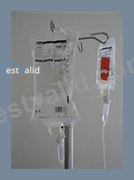
Cellular dehydration is one of the potentially life-threatening consequences of diabetic ketoacidosis (DKA), which is a condition that occurs when the body does not have enough insulin to use glucose for energy and starts to break down fat instead. This produces ketones, which are acidic substances that accumulate in the blood and urine. DKA causes hyperglycemia, which is a high level of glucose in the blood, and osmotic diuresis, which is the loss of water and electrolytes through the urine. This leads to cellular dehydration, which is the shrinkage of the cells due to the loss of water from the intracellular fluid. Cellular dehydration can affect the brain and cause neurological symptoms, such as confusion, lethargy, coma, and death12.
Other potentially life-threatening consequences of DKA include metabolic acidosis, which is a low pH of the blood due to the excess of ketones, and respiratory compensation, which is the increase of the breathing rate and depth to expel carbon dioxide and lower the acidity of the blood12. These are not the same as metabolic alkalosis or respiratory alkalosis, which are conditions that cause a high pH of the blood due to the loss of acids or the retention of bases2. Intracellular hyperglycemia is not a consequence of DKA, as the glucose cannot enter the cells without insulin and remains in the extracellular fluid12.
NEW QUESTION # 524
Which of the following is MOST LIKELY to occur with dilated cardiomyopathy?
- A. Decreased RA pressures
- B. Increased cardiac output (CO)
- C. Suppressed A wave on the PAOP waveform
- D. S3/S4 heart sounds
Answer: D
Explanation:
Dilated cardiomyopathy begins with gradual destruction of the myocardial fibers, impairing myocardial contraction. As the disease progresses, cardiac output (CO) decreases as a result of left ventricle dilation, with increased blood volume in the left ventricle at the end of diastole. Ventricular compliance is reduced, increasing left ventricular filling pressures (LVEDP). This can result in S3/S4 heart sounds and dysrhythmias. Increased right ventricular filling pressures and increased atrial pressures ensue.
An S4 heart sound may develop as the atria attempts to eject blood into stiff ventricles. An elevated A wave is likely on the pulmonary artery occlusion pressure (PAOP) waveform, and elevated right atrium (RA) pressures are likely due to the dilated nature of the ventricles.
NEW QUESTION # 525
The nurse reads a journal article outlining research on a new technique for inserting IVs. The research is rigorous and the new technique has been shown to improve patient outcomes while not increasing the risks to the patient. Which of the following responses by the nurse is BEST?
- A. Avoid implementing the new technique until there is stronger evidence that it is beneficial to patients
- B. Wait to implement the technique in their own practice until it becomes more mainstream
- C. Begin implementing the new technique into their own practice
- D. Wait until they see at least two other sources that replicate these findings
Answer: C
Explanation:
If a new technique has been shown to improve patient outcomes while not increasing the risks to the patient through rigorous research, then the nurse can consider implementing the new technique into their own practice. It is not necessary to wait to implement the technique in their own practice until it becomes more mainstream or until it becomes more common in the literature.
NEW QUESTION # 526
The critical care nurse understands that hospitalization on a critical care unit is NOT LIKELY to cause:
- A. Delirium
- B. Post-traumatic stress disorder (PTSD)
- C. Depression
- D. Dementia
Answer: D
Explanation:
Dementia is a progressive, irreversible loss of intellectual or cognitive abilities, such as reasoning, math, or abstract thinking. It is most often associated with an underlying pathological condition, and is not likely to be caused by hospitalization in a critical care unit.
Delirium, PTSD, depression and anxiety are all potential conditions that may be caused by, or exacerbated by, critical care hospitalization.
NEW QUESTION # 527
An absolute neutrophil count that is less than which of the following values indicates a severely compromised immune system response:
- A. 5,000 cells/mm3
- B. 1,000 cells/mm3
- C. 20,000 cells/mm3
- D. 10,000 cells/mm3
Answer: B
Explanation:
An absolute neutrophil count of less than 1000 cells/mm3 severely compromises immune system response, particularly to bacterial infections.
NEW QUESTION # 528
The nurse is caring for a patient recently diagnosed with acute left-sided heart failure. Which of the following is consistent with this diagnosis?
- A. An Ejection Fraction (EF) 55%
- B. Pansystolic murmur heard at LLSB (Lower Left Sternal Border) secondary to tricuspid ring stretching
- C. Decreased pulmonary artery pressures
- D. Bilateral pleural effusions
Answer: D
Explanation:
Patients with Heart Failure (HF) present with clinical signs and symptoms of intravascular and interstitial volume overload, as well as manifestations of impaired tissue perfusion (i.e., dyspnea, pulmonary edema, JVD (Jugular Vein Distention), chest discomfort and peripheral edema). More specific to left- sided HF is pulmonary congestion, including pleural effusions and pronounced crackles and/or rales upon auscultation. Diagnostic tests include chest x-ray findings of cardiomegaly and a cardiothoracic ratio of > 0.5.
Pulmonary artery pressures are generally elevated and EF is typically < 40% secondary to decreased left ventricular function. A pansystolic murmur is heard at the apex due to mitral regurgitation.
NEW QUESTION # 529
Which of the following is the "gold standard" for diagnosis of pulmonary arterial hypertension (PAH)?
- A. Right-heart cardiac catheterization
- B. Echocardiogram
- C. Serology testing
- D. Computed tomography pulmonary angiography (CTPA)
Answer: A
Explanation:
Though all of the answer choices are diagnostic tests for PAH, right-heart catheterization is the gold standard for diagnosis with vasodilator testing for benefit from long-term therapy with calcium channel blockers.
A positive response is a decrease in mean pulmonary artery pressure of 10 to 40 mm Hg, with an increased or unchanged CO from baseline values.
NEW QUESTION # 530
The critical care nurse is caring for a kidney dialysis patient who has missed his last two appointments at the dialysis center. His ABG values are reported as follows:
* pH: 7.32
* PaCO2: 32 mmHg
* HCO3: 18 mEq/L
Interpret the patient's blood gas results.
- A. Partially compensated respiratory acidosis
- B. Partially compensated metabolic acidosis
- C. Normal ABG
- D. Acute (uncompensated) respiratory acidosis
Answer: B
Explanation:
Normal pH is 7.35-7.45. In this scenario, the pH is 7.32; therefore, we have acidosis. PaCO2 is low at 32 mmHg (normal 35-45). Normally, the pH and PaCO2 move in opposite directions, but not in this scenario. Because the pH and PaCO2 are moving in the same direction here, it indicates that the acid- base disorder is primarily metabolic. In this case, the lungs, acting as the primary acid-base buffer, are now attempting to compensate by "blowing off excessive C02", and therefore increasing the pH.
Bicarbonate is low at 18 mEq/L (normal 22-26). Normally, the pH and the HCO3 move in the same direction; since the pH and the HCO3 are both falling, we can confirm that the primary problem is metabolic.
Because there is evidence of compensation (pH and PaCO2 moving in the same direction) and because the pH remains below the normal range, the interpretation of this ABG result is partially compensated metabolic acidosis.
NEW QUESTION # 531
Which of the following is LEAST true regarding the principle of advocacy?
- A. Nurses are ethically obligated to advocate for their patients
- B. Advocacy should be guided entirely by the nurse's view on what is best
- C. Advocacy may lead to increased conflict
- D. Advocating for a patient is a role that the nurse may be better able to fill than a patient's family member
Answer: B
Explanation:
While advocacy should be at least partially guided by the nurse's view on what is best, the nurse must also take the patient's perspective and wishes into account. Advocating for a patient may cause conflict that otherwise would not have occurred. Nurses are uniquely able to advocate for patients because they have a better understand of the nuances of the patient's condition and of how care is provided. Nurses are certainly ethically obligated to advocate for their patients.
NEW QUESTION # 532
When providing end-of-life care, which of the following should the nurse prioritize?
- A. Maximizing patient comfort
- B. Ensuring the DNR and other legal documents are completed
- C. Encouraging the patient to try new treatments
- D. Comforting and supporting the patient's family
Answer: A
Explanation:
When providing end-of-life care, the nurse's primary role is to ensure the patient's comfort and quality of life. Comforting and supporting the patient's family will become the primary goal after the patient passes; however, it is not while the patient is still alive. Ensuring the DNR and other legal documents are completed is secondary to promoting the patient's comfort. Encouraging the patient to try new treatments is only appropriate if it will support patient comfort or if it is consistent with the patient's wishes.
NEW QUESTION # 533
......
CCRN-Adult Premium Exam Engine pdf Download: https://passtorrent.testvalid.com/CCRN-Adult-valid-exam-test.html